

HomeTreatments
Los Angeles + Orange County
Treatments
Four ways to deal with termites. Three of them are cheaper than you think, and one is a tent.
The right treatment is decided by where the colony is, not by what is on the truck. Below is every option we run, what it actually does, and the published price range for the two that have one.
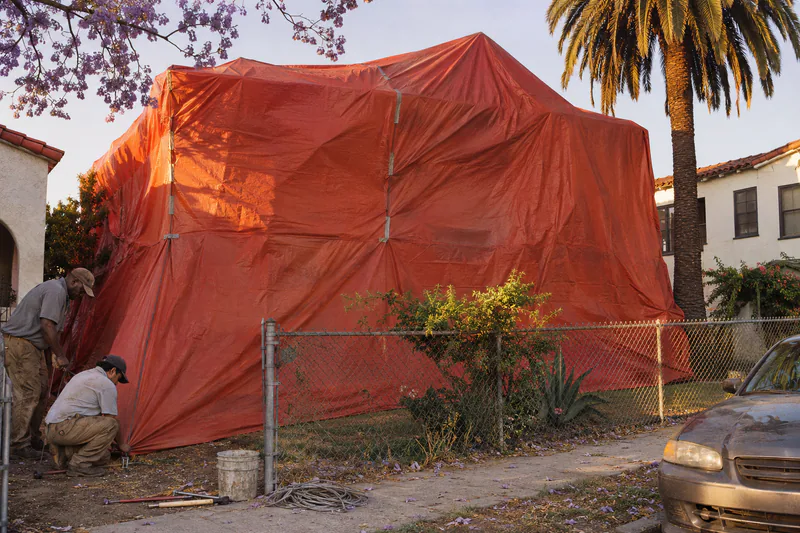
Start with where it is.
Drywood termites live in the wood. Subterranean termites come up from the soil. The two need different chemicals, different equipment and different money.
- 01Whole-structure fumigationA tent, a charge, a clearance. The only method that reaches every gallery in the structure at once.$1,500 – $3,000
- 02Spot treatmentDrilled, injected, patched. One colony in one or two members, no tent and no move-out.$100 – $300
- 03Heat treatmentFour to six hours at 120 to 160 degrees in a sealed section. No gas, and no way to check what the heat could not reach.Quoted after inspection
- 04Subterranean treatmentsLiquid at the entry points, with bait and monitoring where the colony has to be found first.Quoted after inspection
- 05Termite and fungus wood repairThe part most companies hand to somebody else. We do it in house.Quoted after inspection
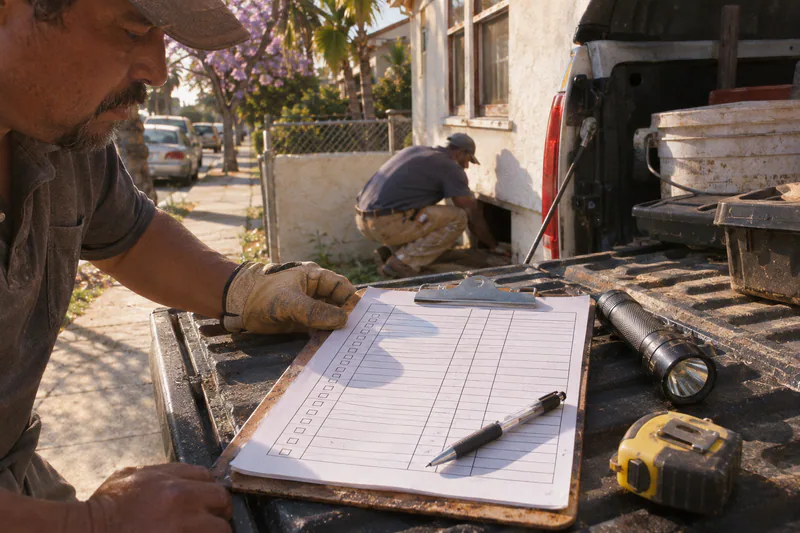
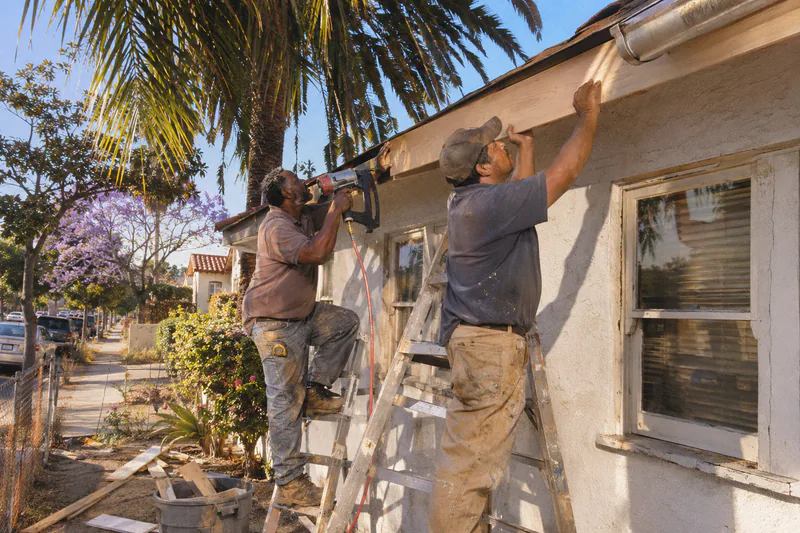
Whole-structure fumigation.
Drywood termites, more than one colony, or no way to isolate them.
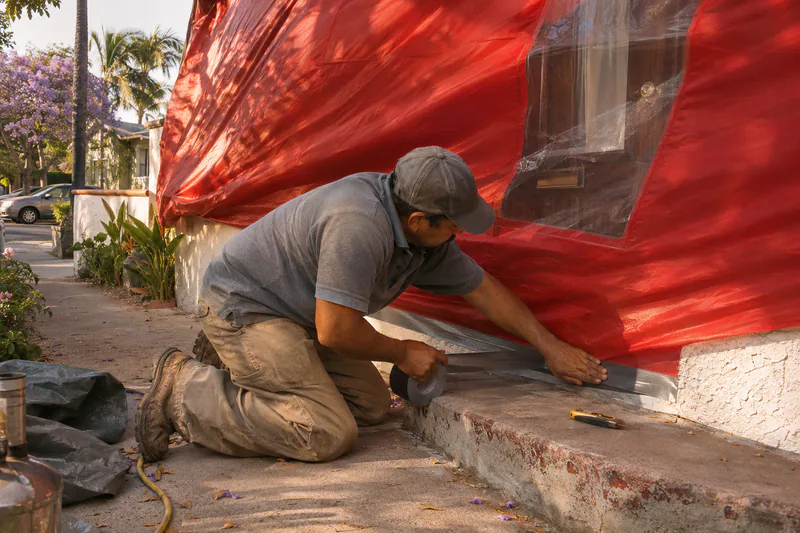
A tent is built around the entire structure and the gas is released inside it. Because the gas is a gas, it reaches the galleries that no spray touches: the ones behind a finished wall, inside a hollow door, in a rafter you cannot see from the attic.
We use Vikane. It is the whole-structure fumigant the label is written for, it carries the EPA's Stratospheric Ozone Protection Award for replacing an ozone-depleting substance, and it is the standard for drywood work in this region.
The tent goes up, the structure is charged, the exposure is held, and the gas is released. Nobody goes back in until the clearance is issued. That sequence is not a formality; it is the treatment.
Note The house has to be prepared before the tent goes up. Food, plants, pets and medication come out or get double bagged, and we walk through that list with you before the crew arrives.
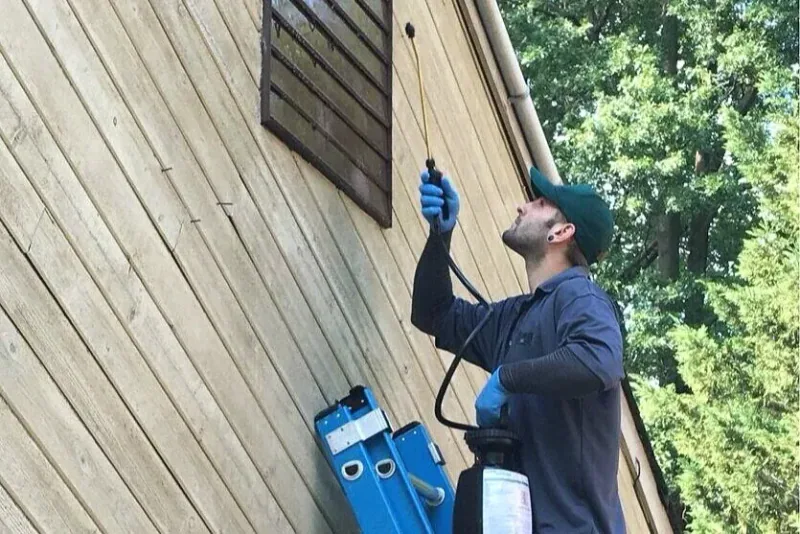
Spot treatment.
One colony. One frame. No tent.
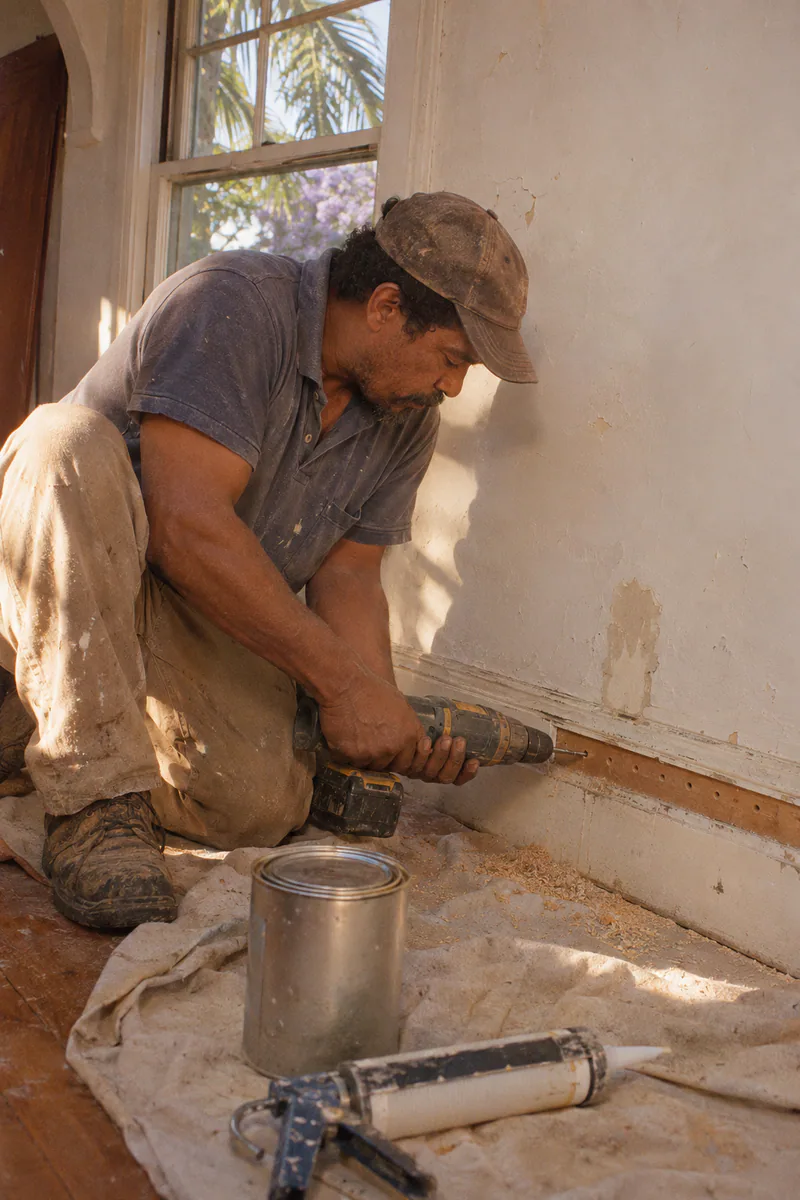
The affected wood is drilled at the gallery, the termiticide is injected, and the holes are patched. It is the least disruptive option there is, and for a single drywood colony in a window frame or a fascia board it is usually the right one.
The honest limit: the product only goes where the drill goes. If a second colony is in a member nobody opened, a spot treatment will not find it. That is why the extent matters more than the price, and why we would rather inspect twice than treat blind.
Orange oil is the alternative people ask for. It works by contact, so its reach is only as good as the drilling; it can stain paint and carry an odor for a while. We will run it where it is the right call and say so where it is not.
Note Spot treatment is priced by the number of separate places that need it, which is why the published range has two ends.
Heat treatment.
No gas. Also no guarantee the heat gets everywhere.
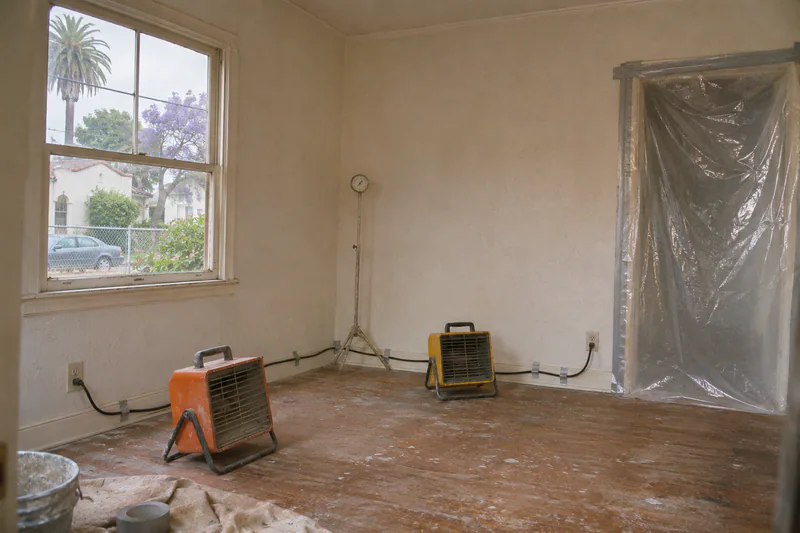
The treated area is sealed and brought to between 120 and 160 degrees for four to six hours. Termites do badly at that temperature, and there is no chemical residue left behind.
The complications are structural and practical. Beams have to tolerate the expansion. Tile and concrete hold heat badly, and termites underneath them may never reach temperature. Electronics, artwork and anything with a low tolerance for heat has to come out of the space first.
We offer it because it is the right answer in a narrow set of buildings where gas cannot be used. It is not the answer for a whole house with multiple colonies.
Subterranean treatments.
The colony is in the soil, so the soil is what gets treated.
Liquid application puts product at the entry points and along the foundation line. Repellent products keep the termites out of the treated zone. Non-repellent products are undetectable, so the termites move through them and carry the material back to the colony.
Bait and monitoring is the slower path. Stations go in the ground, they get checked, and when activity shows up the monitoring station is replaced with a bait station. The colony takes the bait home. It works, and it takes longer than a liquid treatment.
Either way, the conditions still have to be corrected: earth to wood contact removed, the grade dropped below the siding, the cellulose debris under the house vacuumed out. A treatment that leaves the conditions in place is a subscription.
What each one costs.
These are the ranges our own FAQs publish. They are the only prices on this site.
- 01
Free WDO inspection
Interior, exterior, garage and the areas you flag.
Free
- 02
Spot treatment
Depending on how many separate places the termites are in.
$100 – $300
- 03
Whole-structure fumigation
Square footage, the method and the chemical all move it.
$1,500 – $3,000
Fumigation is priced on the cubic footage of the structure, not the lot. Heat and subterranean work are quoted from the inspection.
Termite and fungus wood repair.
The part that finishes the job.
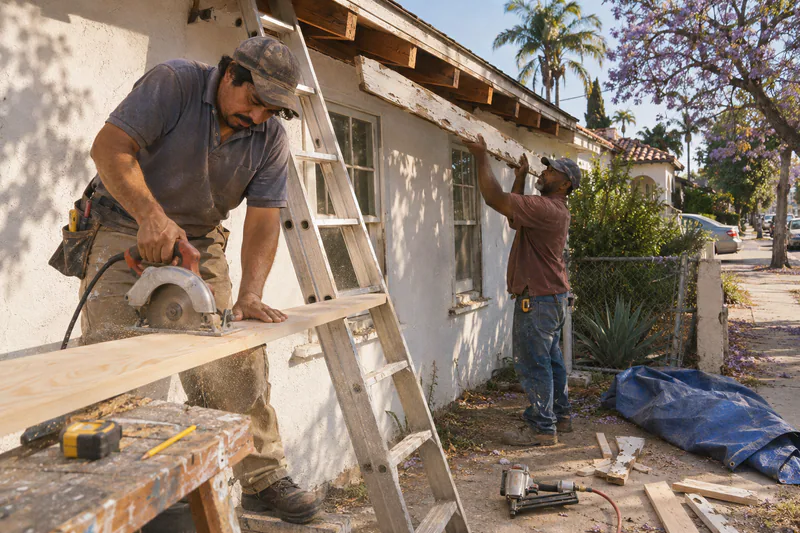
Treating the termites does not put the house back together. A failed fascia board, a soft eave, a rafter that has lost its section, a porch post with no strength left at the base: those are carpentry, and somebody has to do it before a report clears.
We do that work in house. Where the member is failed, it gets replaced. Where it is sound but has lost section, it gets reinforced. Where the damage is only at the surface, replacement is often unnecessary, and we will say so.
A repair without the water fix comes back. Every fungus finding has a moisture source, and the report names it. Correcting that source is part of the repair, not an optional extra.
The four questions that decide it.
01How do I know whether I need a tent or a spot treatment?
By how many colonies there are and where they sit. One colony in one window frame or one fascia board is usually a spot treatment. Multiple colonies, or members that cannot be isolated, usually means a tent. The inspection is what answers it.
02How long does a fumigation take?
The tent is up for the exposure the label calls for at the dosage the structure needs, and nobody re-enters until the clearance is issued. The sequence is fixed; the window depends on the building.
03Is the gas safe for the house?
Vikane is a whole-structure fumigant used for exactly this work, and it carries the EPA's Stratospheric Ozone Protection Award for replacing an ozone-depleting substance. It leaves no residue, which is why food and medication still come out before the tent goes up.
04What if there is wood damage behind the termites?
That is the repair, and we do it in house. Where the member is failed it gets replaced; where it has lost section it gets reinforced; where the damage is only at the surface, replacement is often unnecessary.
Not sure which one you need?
Most people are not, and that is what the inspection is for. Call and describe what you are seeing; we will tell you which visit makes sense.