

HomeTermite inspection
Los Angeles + Orange County
Termite inspection
A free inspection, and an honest account of what it does not cover.
Southern California is a drywood termite climate. The question is not whether a house can get them, it is whether anyone has looked. We look for free, we write down what we find, and we tell you which inspection you are getting.
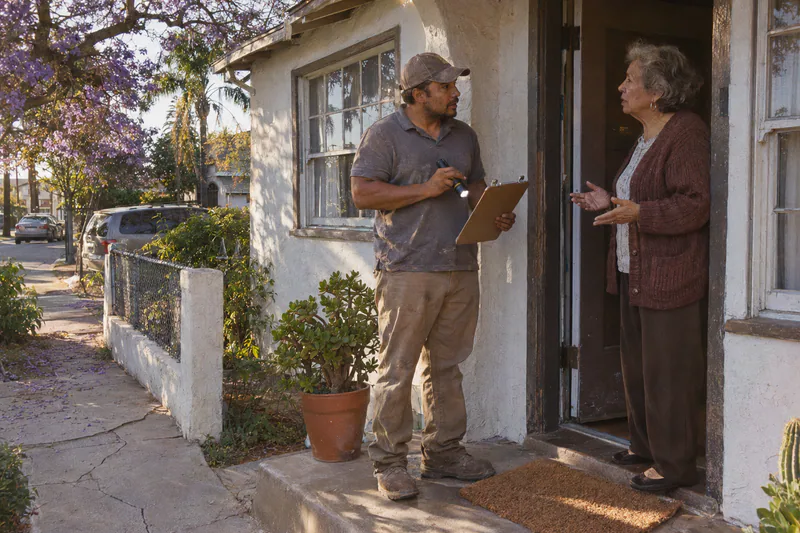
The descent
It starts under the house.
Four places we check on every inspection. Most homeowners have never seen any of them.
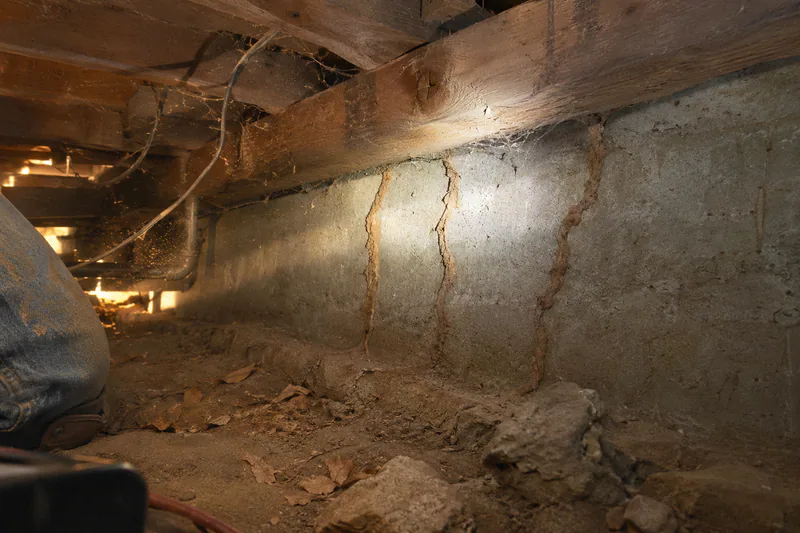
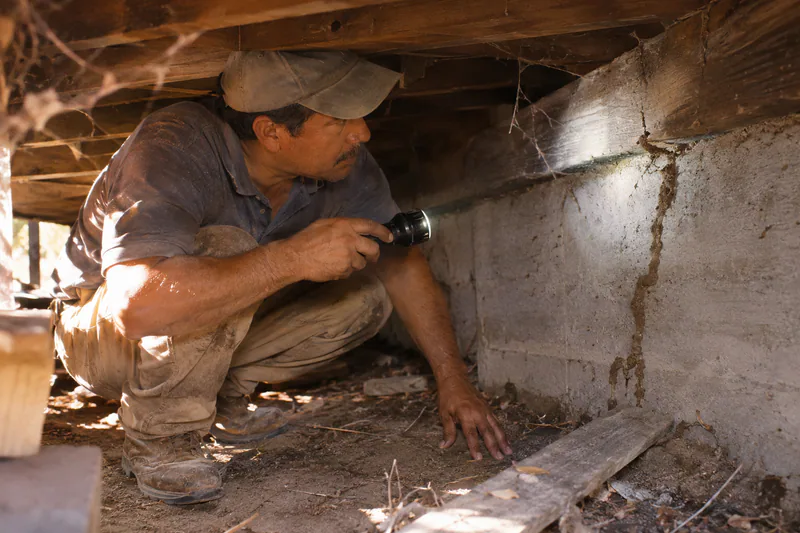
010 ft The crawl space under a raised floor: earth to wood contact, mud tubes on the stem wall, form boards and cellulose debris left behind by a builder in 1948.
In the report Section 1 if there is active or damaged wood. Section 2 for the contact points and the grade.
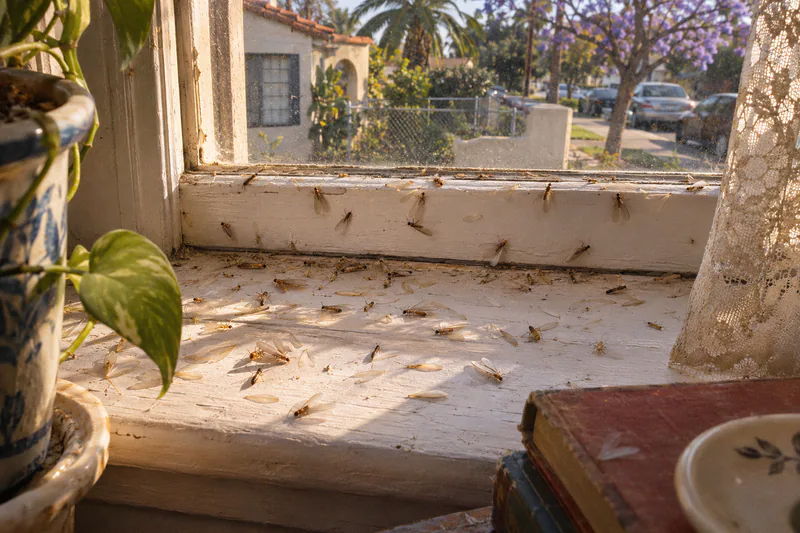
022 ft Drywood swarmers push out of a gap you can slide a dime into. Frass on the sill, wings on the frame, a gallery you can see if the paint has lifted.
In the report Species, extent, and whether a spot treatment in the frame is enough.
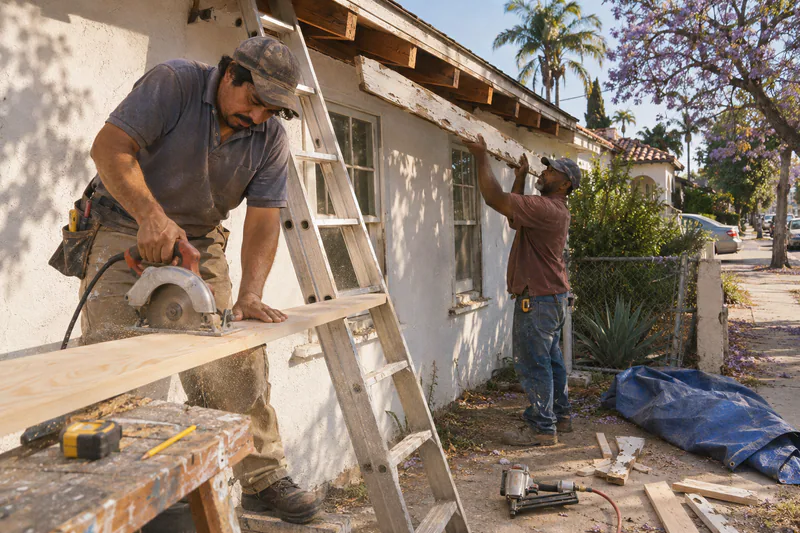
039 ft The board most often replaced on a Los Angeles bungalow. Dry rot and fungus start where water sits: a failed gutter, a roof leak, a paint edge that has been open for years.
In the report Linear feet to replace, and the water source that has to be corrected with it.
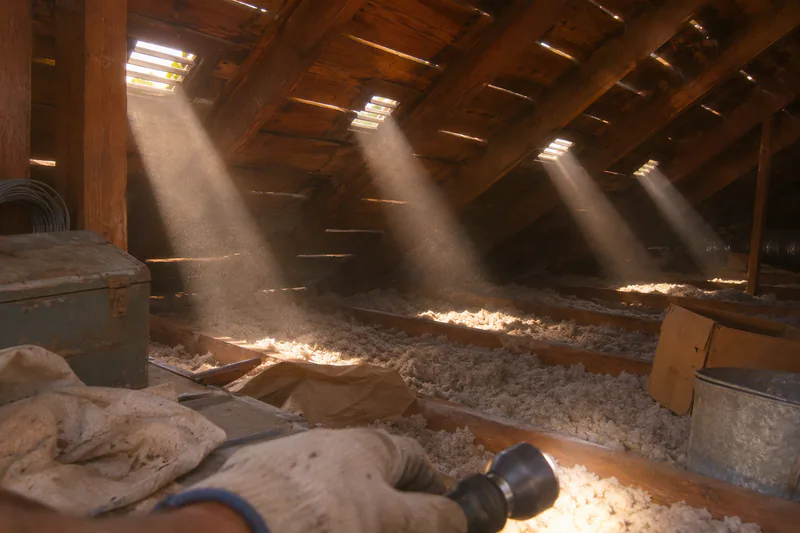
0414 ft Swarmers enter at the ridge and the vent. Rafters and sheathing get checked for galleries, staining and the moisture that follows a repair done badly.
In the report Whether the frame is sound, and the pieces that are not.
Two inspections. Only one of them is free.
The word free gets used loosely in this trade. Here is the split, in the owner's own terms, so you know which one you are booking.
- 01
The free limited inspection
Interior, exterior, garage, and any area of concern or suspected activity you point out. It finds the obvious and tells you whether the obvious is the whole story.
- Interior
- Exterior
- Garage
- Areas of concern you report
- 02
The comprehensive inspection
Everything above, plus the places a termite actually lives: under the floor, above the ceiling, behind the trim on the outside of the house. Quoted before it starts.
- Subarea
- Attic
- Attached decks
- Foundations and abutments
- Interior, exterior, garage, carport
What we look for and report on.
Five organisms and the conditions that invite them. Every item below is written into the report by name.
- 01
Termites, all species
Drywood, subterranean, and the swarmers either one produces.
- 02
Wood boring beetles
Their exit holes and the frass that falls out of them.
- 03
Other wood destroying organisms
The ones that are neither termite nor beetle but still eat the house.
- 04
Fungus infections
Wood decay fungus, which is water damage with a biological cause.
- 05
Dry rot
The result: wood that has lost its strength while still looking like wood.
- 06
Conditions conducive
Earth to wood contact, faulty grade, cellulose debris in subareas, excessive moisture.
What the report is for.
A termite report is not a verdict on the house. It is a list, split in two. Section 1 is the work that needs doing. Section 2 is the conditions that will cause the work if nobody corrects them.
That split matters at a closing, because a buyer, a seller, a lender and an escrow officer all read the same two lists and draw different conclusions from them. The report has to be specific enough for all four.
We inspect, we write, and we repair. The same company that signs the findings can do the Section 1 work, which is why a report from us tends to close rather than restart a negotiation.
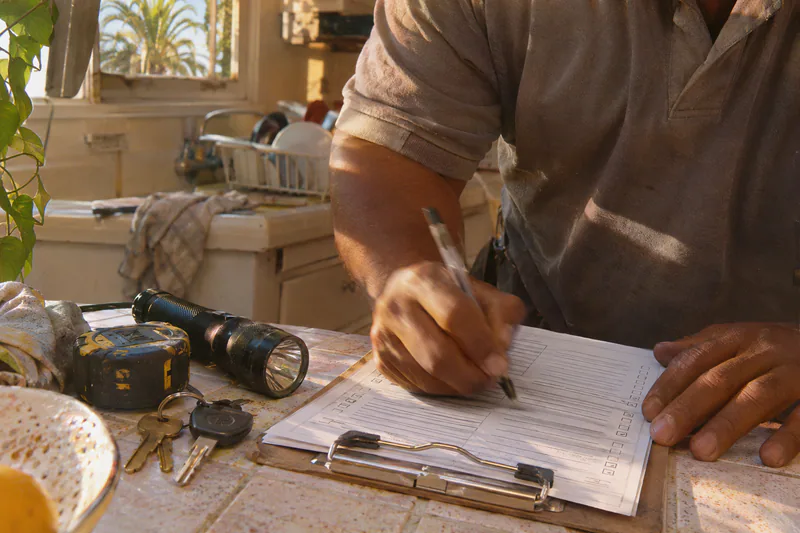
Three frames from a real inspection.
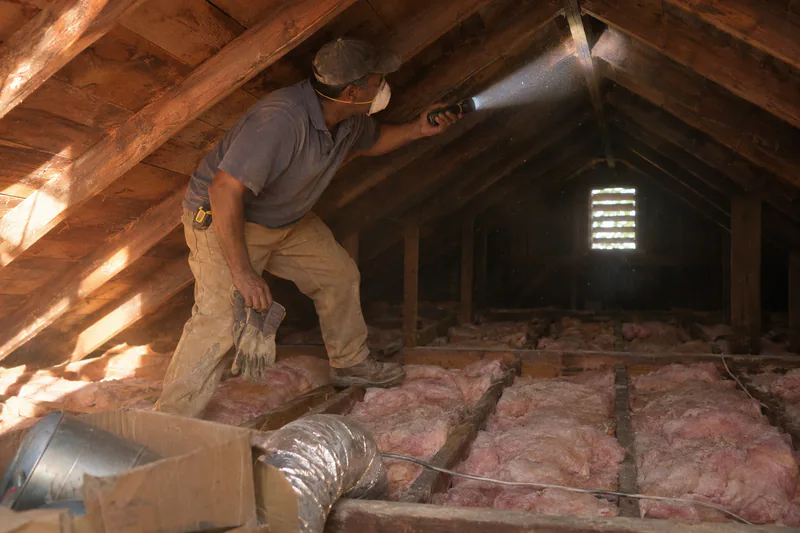
The attic is where a roof leak becomes a termite and fungus problem.
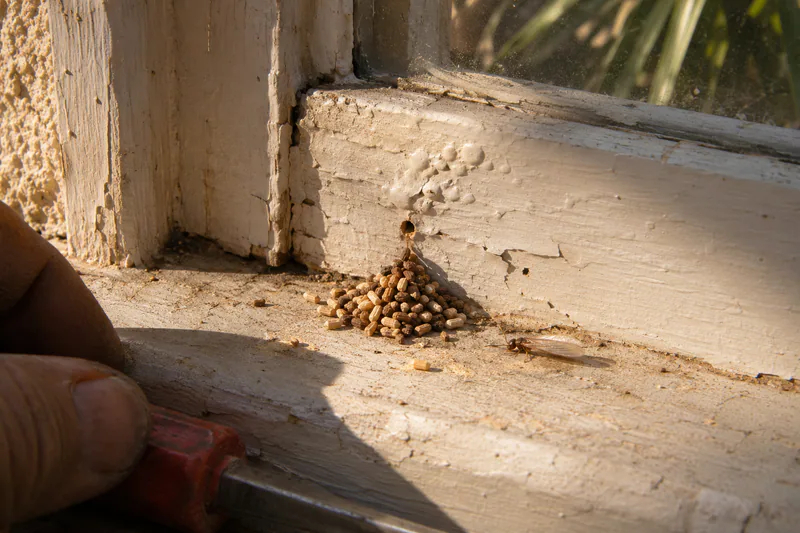
A kick hole and its pellet pile. The colony is inside the member.
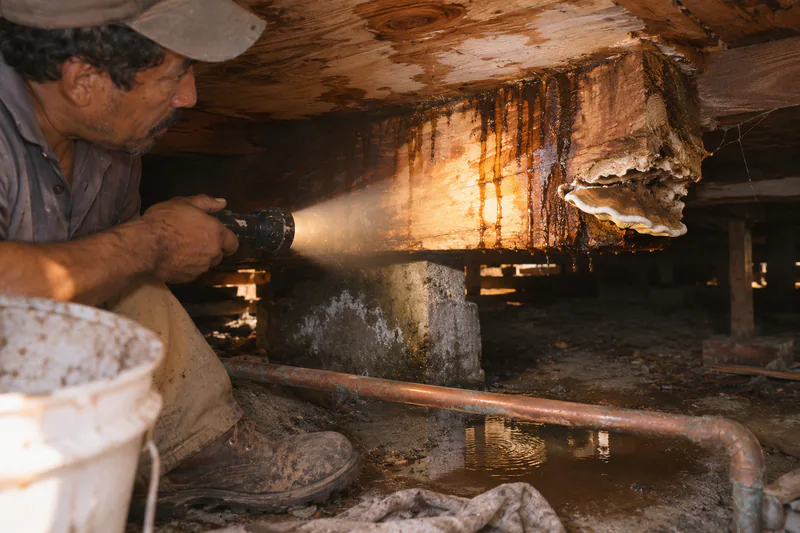
A fruiting body means the wood has been wet for a long time.
Inspection questions.
01How long does an inspection take?
The limited inspection is quick. The comprehensive inspection takes longer, because the subarea and the attic are the slow part. Neither has a clock attached to it that would make the answer useful.
02Do I have to be there?
It helps, because the areas of concern you point out are part of the free inspection. If you cannot be there, tell us on the phone and we will look at the areas you name.
03What if you find nothing?
Then the report says nothing. A clean inspection is a real result, and it is the one a seller wants in hand before a buyer's inspector finds something.
04Will the inspector try to sell me a treatment?
The inspector will tell you what the findings mean and what each option costs. The published ranges are on the treatment pages. Nothing is added to a report that the inspection did not support.
Book the free inspection.
Give us the address and a time. If it is an escrow, give us the closing date too.